

Grey nomads who grew up camping in national parks which generally offered only the most rudimentary of facilities are finding themselves in a completely changed environment.
And the evolution of our national parks appears to be picking up pace.
As more and more people discovered the joys of the great outdoors, hot water and flushing toilets have become increasingly commonplace. Honesty boxes and ranger fee pickup have been replaced by online booking systems and it seems commercial enterprises are gaining an ever-larger foothold in these publicly-owned tracts of land.
Just last week, the NSW government announced that a new service will be available at 16 of its national parks campgrounds that allows visitors to hire a tent or caravan provided by a private operator rather than bringing their own.
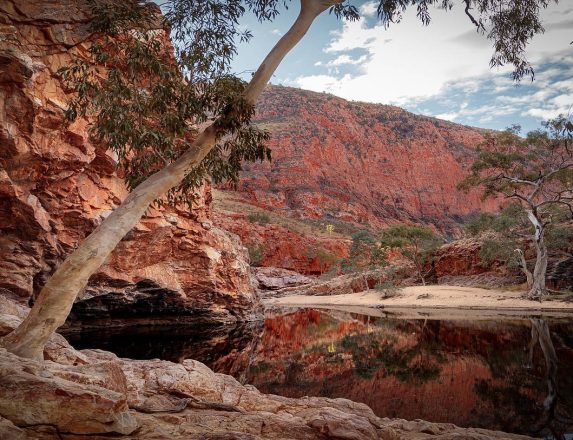
NT national parks are stunningly beautiful ... even without commercial involvement. PIC: Terry Robinson7 / Pixabay
And up in the NT, the Government is pushing full steam ahead with its plans to unlock new tourism opportunities in Territory parks.
Back in July at the NT Investment Summit, it said it was encouraging new tourism investment opportunities in July, including: safari-style camping and guided nature experiences in Litchfield National Park; the redevelopment of Jalmurark Campground in Elsey National Park; premium accommodation and nocturnal wildlife experiences at Alice Springs Desert Park; and boutique heritage accommodation at Tennant Creek Telegraph Station.
Now the NT Government is progressing plans for a glamping development at the Territory Wildlife Park, which sits next to Berry Springs Nature Park near Darwin. It would introduce a new nature-based accommodation experience, giving visitors the opportunity to stay overnight surrounded by Territory wildlife.
Minister for Tourism and Hospitality and Parks and Wildlife, Marie-Clare Boothby, said the proposal was an example of the new tourism opportunities the Government was encouraging across the Territory.
“Our parks are one of our greatest assets, and we’re determined to unlock their potential for tourism, investment and local jobs,” she said. “Imagine waking up in the heart of the Territory bush, surrounded by the iconic sounds of native wildlife such as curlews, cockies and kookaburras, just a short drive from Darwin.”
The minister said this was exactly the kind of unique experience visitors were looking for, and exactly the sort of opportunity the government wanted to encourage.
“We know our parks already attract more than three million visits a year,” she said. “The opportunity is to turn more of those day trips into overnight stays, giving visitors more reasons to stay longer and explore further and spend more in our regions.”
An expression of interest process for the Territory Wildlife Park glamping opportunity commenced in November 2025, with a local proponent identified as the preferred proponent.
 The proposal is now progressing through the Exceptional Development Permit process.
Minister Boothby said attracting new tourism experiences was central to the Territory’s Visitor Economy Strategy 2032.
“Across Australia and around the world, wildlife parks and zoos are offering unique overnight accommodation experiences that allow visitors to connect with nature in a completely different way,” she said.
It all comes after new University of Queensland research found Australians were open to tourism development within national parks and World Heritage sites if it is ‘responsible, low-impact and transparent’.
A team led by Professor Brent Richie surveyed 1,000 Australians about their attitudes towards a range of tourism developments, including accommodation, recreational trails or cable cars in protected areas.
“We found 68% of people surveyed support tourism in these areas – as long as they trust the organisation managing the project, the costs and benefits are distributed fairly, and they felt engaged in the decision-making process,” Professor Ritchie said.
Are you a Grey Nomad member yet? Click here to find out about the discounts, competitions and other benefits on offer.





How about opening them, or at least some of them, to people with dogs. Sure on-leash and pickup behind but hardline no pets stops lots of folk to skip…
No, dogs in National Parks is NEVER a good idea. How about accepting the consequences of your choice to travel with a dog?….
Absolutely not. No dogs or cats should be in our National Parks.
Agreed!
In our 80’s and always had a dog (miniature dashounds) gray nomading for 30 years been around the block 7 times and never stopped at a Nat.Park because of strict rules , feel like being discriminated against. And yet ,as a shooter i know parks are alive with all the feral animals (cat’s etc.)you can think of killing native birds and animals, I’m sure a control program or deposit in place could accommodate pet owners to visit some of the best places in this country..
Try… no. The concept that there are already unwanted pests in National Parks, therefore we should permit another is grossly nonsensical. Keep your animals out of National Parks…
Unfortunately not all dog owners are responsible dog owners. NSW state forests allow dogs on a leash in its camping areas yet I have found on a number of occasions dogs being allowed to roam throughout the campground. We cannot risk this happening in our National Parks. If you travel with a dog you will need to stay out of our National Parks .
Just more Kakadon’t ahead !!!
A survey of 1000 people is surely not representative of Australian opinion? Having just revisited K’Gari Fraser Island for the first time in several years, it was disappointing to see how much damage increased tourism has done to such a pristine environment. And disappointing too to see the disrespect of 4WDers “having a bit of fun” at the expense of our native flora, fauna and coastal dune ecology. Our national parks are national parks to protect them and the nature contained within them. Access is a privilege not a right.
Well said…