

The near-miraculous safe discovery of a teenager who had been missing for six days after getting lost on a camping trip is a testament both to human resilience, and to the sheer determination and professionalism of rescue services.
The youngster, 17-year-old, William, went missing late last week while camping in Walhalla East in Victoria’s Gippsland region. He was with another boy when he walked a short distance from the pair’s campsite and became disorientated.
William’s camping companion was then unable to locate him.
After the alarm was raised, an extensive search of the area was conducted by Victoria Police uniform officers, specialist units and other agencies including the SES, Ambulance Victoria, Bush Search and Rescue, Australian Search and Rescue K9, Search and Rescue Dogs K9 and Cowwarr Football Netball Club … as well as volunteers from the community.
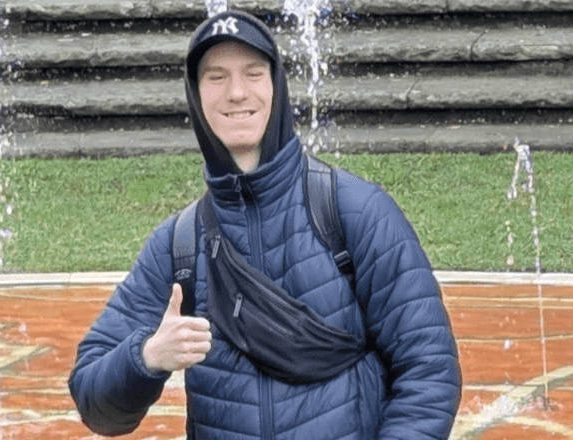
William was found safe and well after being missing for six days. PIC: Victora Police
Air Wing were conducting an aerial search of the Cowwarr area yesterday when they spotted a tacklebox in bushland around two kilometres east from Stoney Creek. Zooming in on the tacklebox, they found William laying down close by in a creek.
Flight officers winched down and retrieved Will before bringing him back to the command post to reunite with his mum.
Amazingly, the teenager was in good spirits and, for the most part, in good health.
He was taken to hospital for monitoring.
 Of course, it is not only young people who can get into trouble in the vastness of the Australian bush.
As grey nomads continue to head out to remote country in ever greater numbers and undertake activities such as bushwalking and prospecting, the authorities continue to appeal for them to take all reasonable precautions to remain safe.
The Australian Maritime Safety Authority (AMSA) says that, across the country, land-based search and rescue (SAR) incidents are increasing in frequency and complexity … due in part to more people venturing into unfamiliar environments.
In 2025-26, AMSA responded to 832 land-based SAR incidents, and this figure doesn’t include incidents which police may have responded to without AMSA involvement.
One of the key recommendations the organisation has for grey nomads and others heading bush is that they carry a distress beacon, such as a Personal Locator Beacon (PLB).
“PLBs are easy to use and carry, lightweight, and relatively inexpensive, and can be purchased at most outdoor retailers or online and can even be hired if only needed for a short period,” an AMSA spokesperson told the Grey Nomads earlier this year. “When activated in Australia, PLBs send a signal via satellite to the AMSA Response Centre in Canberra.”
The organisation says it is critical that a distress beacon is properly registered with AMSA, so they know who to contact when it is activated in an emergency. This information can also help them coordinate a rapid response more effectively.
While huge searches for lost adventurers occasionally make headlines, there are also a frighteningly high number of close shaves that most people never hear about … but carry equally pertinent warnings.
Certainly, when grey nomads, Tony and Lesley Melville, hear of one of these disasters, or near disasters, they immediately think ‘that could easily have been us’.
Several years ago, the pair were at Mount Augustus in northern WA when they got disorientated while out on a designated walk.
“An easy short walk turned into an hour of wondering where we were,” said Lesley. “We managed to miss one of the national park’s posts on the very ‘unmarked’ dry creek bed and then, when trying to back track to the last marker, we became totally lost.”
The pair suddenly found every direction they went looked exactly the same, and they had no idea where they had started from.
“My calm-headed husband made the decision to walk south in the creek bed keeping the mount on our right and in the direction of the car park,” said Lesley. “It felt like we were walking on the spot as the landscape, including Mount Augustus, didn’t seem to change, making it very hard to pick a place to use as a landmark.”
To their great relief though, they eventually found a fire trail and were able to walk back to the road.
“With my husband being a diabetic, we always have snacks and water, and also lightweight jackets,” said Lesley. “But it was a lesson learnt not to move too far from one marker until sighting the next one.”
Are you a Grey Nomad member yet? Click here to find out about the discounts, competitions and other benefits on offer.








It is so important to carry a PLB with you when adventuring out solo or with others. You just don’t know if and when you might need it. I carry mine in the car and then transfer it to my bicycle when on rail trails and remote areas, whether solo or with friends. Never needed to use it though!