

A proposal being considered by the Federal Government to dramatically reduce speed limits on unsigned country roads has been scrapped.
A recent public consultation on the proposal that is part of the federal government’s national road safety action plan, received more than 11,000 submissions.
The idea of reducing the speed limit for unsigned sealed roads to 70, 80 or 90 kilometres per hour, and for the unsealed road default limit to be set to 70 or 80 km/h, proved far from popular … and was slammed by grey nomads.
One contributor on the website posted that it was poorly maintained roads will sadly kill and or injure drivers.
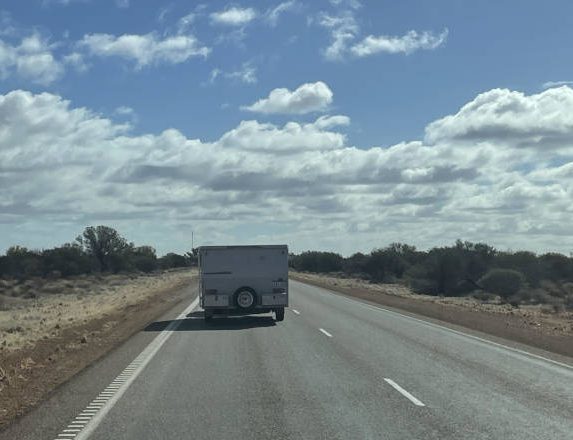
A plan to drastically reduce speed limits on unsigned country roads has been shelved. PIC: Cizza
“Dropping to 70km/h is a clear slap in the face to regional drivers and truck drivers,” he said. “It is economically unviable.”
Another was even more scathing.
“Lowering the speed limits on country roads is only revenue raising and this is always the Government’s preferred option instead of fixing the problem,” he said. “They keep saying it is speed when it is actually poorly maintained roads.”
 The widespread criticism of the plan has meant it has already hit a dead end, with the recent infrastructure and transport ministers’ meeting proving the final straw.
“States and territories raised concerns to a blanket approach to speed limits and reiterated their responsibility for setting speed limits in their jurisdictions,” a spokesperson for federal Transport Minister Catherine King told the ABC. “All ministers agreed to ensure no further work would be done to progress it.”
The idea of cutting speed limits was originally raised in the Department of Infrastructure’s Regulatory Impact Analysis paper.
The document said that, in 2024, 1294 people were killed on Australian roads, with more than 30,000 people seriously injured as a result of road crashes … with speed as a major factor.
“Some roads outside of built-up areas, especially in regional and remote areas, may not be safe to travel on at 100km/h,” the analysis stated. “Many of Australia’s regional and remote roads are not sealed, and may be dirt or gravel tracks … other roads may have sealed surfaces, but may be in poor condition, or lacking the road features that would enable safe travel at high speeds.”
However the abandonment of the proposal has been welcomed by many.
Western Roads Federation chief executive Cam Dumesny told the ABC it was a smart decision.
“We support road safety, but the blanket approach was not appropriate,” he told ABC Regional Drive WA. “Speed limits aren’t going to solve attitude problems; that is certainly a major problem.”
Are you a Grey Nomad member yet? Click here to find out about the discounts, competitions and other benefits on offer.









The stupid idea came from people with no idea in regard to life outside the city limits, common sense prevailed….
As a long time caravanner who prefers b and c roads as they have less traffic and associated agro, I’ll tow at a leisurely 80k/hr, I keep a look out for truckies and talk to them on radio and agree on a passing maneuver.
At 80k you can see the landscape change, the emus, kangaroo, the birds etc.
100 Tom
I agree with you Tom I go at 90 which allows me to see the landscape and animals and I know I can stop in an emergency if needed
We love 2.5 hours out of St George and go into town once a fortnight to stock up. Approximately 200 kms of this return trip is dirt road! The city slickers who make the decisions have absolutely no bloody idea of rural living. Thank God common sense prevailed in this case…
The reduction of the speed limit to 70 or 80 KPH on country roads would have only extended commute times, and increased driver fatigue, which kills as surely as speed.
Another example of “City Centric” stupidity.
Absolutely great decision
Obviously a rule made by politicians that never leave the Canberra and highway network roads, it already takes me hours of driving to get gto anywhere from my country town, once again poor to no road maintenance gets called speeding.
Road speed limit designations can often work well on well maintained roads, but a “one size fits all” for rural/unsealed roads is misplaced when conditions on the same stretch of road can vary dramatically. The best policy is to educate drivers to drive to conditions. The other aspect to consider is that local motorists have a much greater familiarity with a particular road and will invariably drive faster safely than a driver who is unfamiliar with the same road. I often experience this when travelling afar and am happy to pull over to allow faster drivers to safely overtake.
I agree, just because the SIGNED SPEED LIMIT shows a Legal Maximum allowable Speed is as SIGNED one should always Drive at a Speed suitable for the Road Conditions and Weather Conditions.
You DO NOT have to DRIVE at the Maximum Signed Speed Limit. as long as you are considerate of other Road Users.