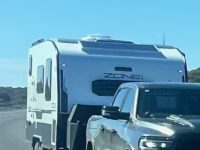

When Maverick Campers and Caravans abruptly went into liquidation a week or so ago, it was latest in a growing list of Australian caravan manufacturers to do so.
It was only a few weeks ago that Australian Off Road (AOR) went into administration, citing price pressure from increasingly sophisticated Chinese imports as a major factor.
Despite these, and a host of other van manufacturer failures in recent years, the Caravan Industry Association of Australia (CIAA) insists the sector’s future is bright … although it acknowledges there are challenges.
The organisation’s CEO, Stuart Lamont, told the Grey Nomads the downfall of many of the failed businesses could be attributed to a specific set of circumstances rather than a wider malaise in the industry.
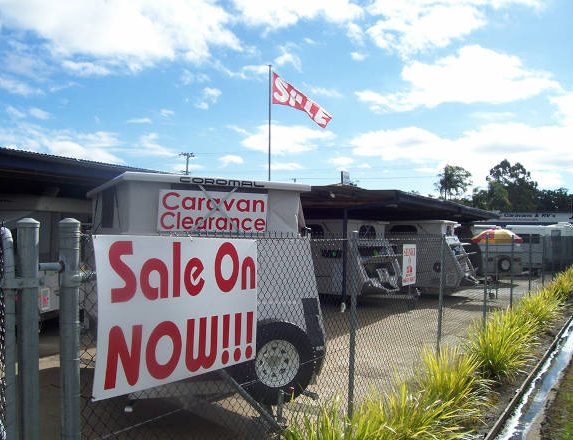
There’s plenty of stock available for potential caravan buyers.
“Of course, we have high fuel prices, interest rates going up, housing valuations going down, and growing cost of living pressures which has all added up to a very negative media cycle,” he said. “Yes, everybody ‘needs’ a car but ‘wants’ a caravan … but the fact is desirability is still high.”
Underpinning Mr Lamont’s confidence, he says, is the simple fact that ‘getting out in a caravan is one of the best ways of travelling’.
He says ongoing global uncertainty is also likely to mean more people focussing on domestic travel, with camping’s social connection element offering unique appeal.
Nonetheless, Mr Lamont is quick to acknowledge that it is a ‘changing world’ and that overseas manufacturers have emerged from an exceptionally low base a decade ago to claim a 50% share of the Australian market.
“The Chinese in particular are fast to market and fast to adopt new technology and their quality is increasing all of the time,” he said.
However, Mr Lamont says choosing a van is ‘horses for courses’.
 “People should look at their intended use … if they are looking to go Outback, out on corrugations, then they want something with the best off-road capabilities and – at the moment – that is seen to be Australian made,” he said. “And I think grey nomads are generally patriotic, and value comfort and tradition whereas, for new consumers, the source of the van is pretty much irrelevant.”
Mr Lamont says there are commonsense steps people can take in order to maximise peace of mind at time of purchase … such as thoroughly researching who they are buying from.
“And the key thing is to understand the arrangements beforehand and how the payments will work,” he said. “You want then to stick to the schedule and if there is something that changes or doesn’t seem quite right, then ask questions and get advice.”
He says that there is lots of caravan stock about at the moment and the ultimate way to get protection is to buy something that has already been manufactured and is ready to go.
Mr Lamont says the industry as a whole is very conscious of consumer wariness.
“The CIAA is working to introduce a consumer deposit insurance scheme which we are hoping to get up and running in the next few months,” he said. “There is a lot to it, but it’s something that would add some protection for consumers who have paid a deposit for a van.”
Are you a Grey Nomad member yet? Click here to find out about the discounts, competitions and other benefits on offer.