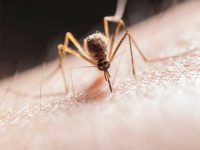

As if the rain hasn’t been a nuisance enough for grey nomads already, what follows could easily be just as bad.
With so much water about, conditions are going to be absoutely perfect for those buzzing menaces which are notorious for wrecking later afternoon Happy Hours.
Experts like David Bock from the Australia Museum are warning that mosquitoes are going to be about this summer … and they are going to be about in massive numbers.
“When you get a lot of standing water and the warmer weather, you will get mosquito numbers exploding,” Mr Bock told the ABC. “Mosquitoes are a species that can breed up very quickly.”
Mr Bock said mosquitoes lay eggs on stagnant water and the nymphs or ‘wrigglers’ have an aquatic stage in their life cycle. When there is lots of water on the ground and in gutters and backyard plant containers, mosquitoes have opportunities to avoid predators and quickly multiply.
Mr Bock says only a small portion of mosquito species are out looking for blood and, of the species that do want blood, it is only the females who bite.
“In a world without people, these mosquitoes would have fed off birds and mammals,” he told the ABC. “But humans happen to be another source of nutrition for these females.”
He says disease becomes a problem when mosquitoes feed on multiple sources of blood, and blood gets mixed between humans and animals.
Ross River virus is the most common mosquito-borne disease and can be found everywhere in Australia but is most prevalent in Queensland, the Northern Territory and the Kimberley region of Western Australia.
The Barmah Forest virus is also found in most regions of Australia and has similar symptoms to Ross River virus.
Grey nomads and others travellers are advised to use insect repellent outside and be conscious of mosquitoes in the early morning and evenings.
It is also sensible to protect your skin with clothes the mosquitoes are unable to bite through. Loose and long light-coloured clothing is considered best. Barrier protection is a lot better than chemical protection.