

Grey nomads who regularly travel long distances on Outback roads will be all too well aware of the importance of taking regular breaks and of not driving while tired.
And a new report from NSW motoring organisation, the NRMA, certainly underlines the importance of making good decisions … and the potentially fatal consequences of not doing so.
The Asleep at the Wheel report included a survey of 1,870 members in NSW and the ACT and found 21% have fallen asleep or closed their eyes behind the wheel. Almost half (47%) had driven tired in the last 12 months and, of those, 20% drive tired at least once a week.
Interestingly though, the report shows that most tired trips (58%) occur during everyday driving, as opposed to long-distance driving (37%).
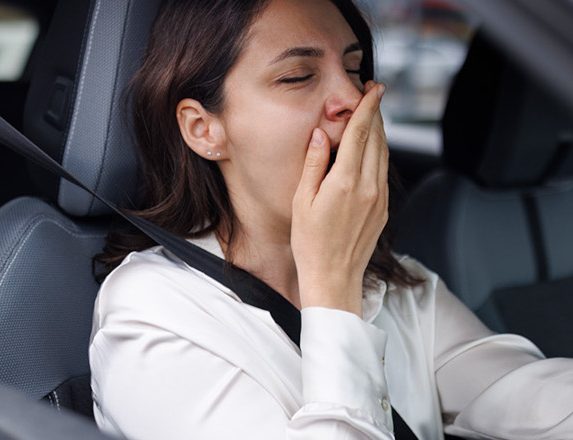
A frightening number of drivers admit to driving while tired. PIC: NRMA
Last year, 75 people died on NSW roads due to fatigue-related crashes, representing 21% of all fatalities. More than 40% were aged 17 to 39.
NRMA spokesperson Peter Khoury said most Australians would be shocked that over one in five road deaths was due to fatigue.
 “The percentage of Australians who have fallen asleep or closed their tired eyes behind the wheel is identical to the percentage of deaths this causes on our roads,” he said. “Clearly more attention needs to be given to this dangerous behaviour.”
The NRMA says that of particular concern was the impact of drowsy driving on at-risk groups including new parents, shift workers, young driver and people with sleep disorders.
The Asleep at the Wheel report calls for:
“With both the NSW and Australian governments scheduled to hand down their budgets in the next two months the NRMA is urging extra funding be allocated to install road treatments that wake drivers up if they are drifting asleep in areas where we know there is a risk of fatigue-related crashes,” said Mr Khoury.
Are you a Grey Nomad member yet? Click here to find out about the discounts, competitions and other benefits on offer.








Actually I have. While driving back from a day out with my wife and two young kids, the heater was on and I started to get drowsy. My car has lane keeping assist and I suddenly had that fully woke up feeling and I knew I had a micro-doze. Thats it. Heater off, cold air blowing fully onto my face, leaning forward, fully engaged into conversation. Am in my 70’s but have never done that before. Awful realisation of what might have happened.
Yes Vehicle HEATERS can cause Drowsiness, I never drive with the AIR SET TO warm
Time to pullover for a 15 minute power nap Brother.
Ask any interstate driver – if they say “never”, they’re either lying or at the start of their first ever trip…
My brother and I were driving at night from Adelaide to Melbourne in the 1950’s after visiting family. At one point on the way home I came over a hill and noted a bridge about 500 meters ahead and the next thing I noticed was the rattle of timber on the bridge. I had been asleep for about 500 meters, and the loose timbers on the bridge woke me — scary stuff!
Wow.
Yes more Audio TACTILE ROAD MARKINGS are needed on all Australian Roads & Highways & Freeways ETC, I have experienced occasions ( even when Not Towing our Caravan ) where I have NOT BEEN TIRED but simply allowed my Vehicle to wander off to the Side and where there, has been these TACTILE ROAD EDGE MARKINGS it has alerted me to this FACT, & I have BEEN ABLE TO correct my Vehicles Direction of Travel & so avoided a possible Vehicle Crash.
I have.
Starting work at 0600 hours getting up at 0430 hours having breakfast and during an hour drive to Newcastle every day, there have been days when I have nearly nodded off.
Coming home after 1500 hours some days has been an effort to stay awake for the hour and a half drive home.
Only once have I been anywhere near as tired when travelling, and I immediately pulled over and found somewhere to rest.
Towing a caravan takes 100% awareness and I have no wish to destroy over $100,000.00 worth of gear and possibly killing myself from being tired.
In 30 years of driving from the Central Coast to Newcastle on the F3 (now M1), I have seen many vehicles just drive off the road into the scrub.
Wandering truckies and drivers, usually tourists, are a constant danger on that stretch of road.
The Central coast to Newcastle stretch of the M1 is about 2 hours of driving for most Sydney drivers, the lack of traffic stimulate and straight droning road puts them to sleep frequently.
watching drivers spear off into the scrub in the middle of the road gives me nightmares.
My wife and I have both gone to sleep doing long stretch driving, lucky the roads where strait, and open land with no trees to hit.
This was in NT and WA, and lucky for the side markers, they woke us up with damage to the car and caravan, there was no place we could pull over for a rest.
A major cause of fatigue is sleep apnoea especially in men over age 50. But many women get it too. Telltale symptoms are chronic snoring and periodic gasping(for air) in sleep; drowsiness and micro sleeps during any time of the day. Made worse is ego(foolish pride) which stops many men from getting a simple sleep test and a CPAP machine. Ask anyone who has a CPAP and they’ll tell you how refreshed they feel and can now drive “all day”. Apnoea really messes with all kinds of other health issues too. Overweight, onset blood pressure, onset diabetes, onset libido issues. Your body is basically suffocating from oxygen deprivation every night. Worst case you cross the white line and kill someone.