
While grey nomads can have the time of their lives staring up at the twinkling night sky in countless Outback locations, one spot perhaps stands out above all others as ‘star-gazing central’.
In 2016, Warrumbungle National Park, just west of the NSW town of Coonabarabran, became the first place in Australia to be certified as a Dark Sky Park by the International Dark Sky Association.
Its low humidity, high altitude, and distance from big cities means there is very little light pollution here, and nearby Coonabarabran has strict measures in place in order to reduce the town’s ‘skyglow’.
It all adds up to a simply magnificent place for grey nomads and others to admire, and learn about, the constellations above.
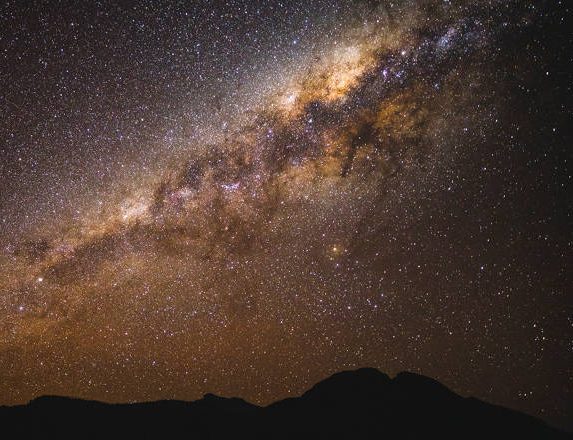
Warrumbungle National Park is a paradise for stargazers. PIC: Destination NSW
While sitting in a campchair simply being wowed by the beauty of the night sky may be enough for some grey nomads, there is also the option to enjoy a stargazing session at the Milroy Observatory just outside of the park, which is home to the largest public-access telescope in the Southern Hemisphere.
Also on the edge of the park is the famous Siding Spring Observatory which, as it is an operational research facility, doesn’t open to the public at night, although visitors can book a day tour of the massive Anglo-Australian Telescope.
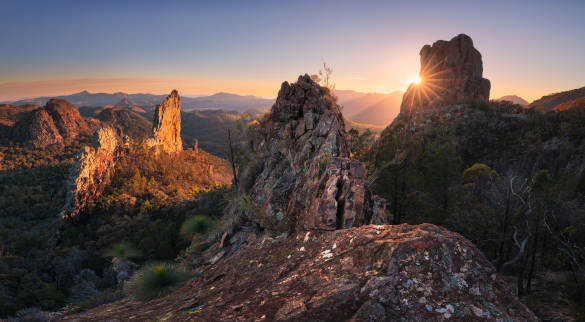
The Breadknife and Grand High Tops walk offers hikers spectacular views over the ancient landscape. PIC: Destination NSW
Stunning as the night sky here is, there is a lot more to Warrumbungle National Park than its overhead views.
The 23,000-hectare park is home to a jaw-dropping jagged landscape formed by volcanic activity over millions of years.
The rocky pièce de resistance is without doubt the Breadknife, a striking formation that rises 90 metres from the valley floor, but there are countless eye-catching outcrops throughout this magnificent park … and some truly incredible walks from which to see them.
The 14.5-kilometre long Breadknife and Grand High Tops walks will take you to Grand High Tops Lookout, 960 metres above sea level, from where there are incredible views over the ancient volcanic landscape and of formations such as the Breadknife, the Needle, Crater Bluff and Belougery and Tonduron Spires.
Other well-known walks include the challenging 4.6-kilometre Belougery Split Rock Walking Track; and the 17-kilometre Mount Exmouth Walking Track which climbs the 1,200-metre Mount Exmouth.
For less ambitious and less energetic grey nomads, the two-kilometre Burbie Canyon Walking Track may be more appealing, and so too the 500-metre track to Whitegum Lookout.
Not surprisingly the park is also home to a wonderful array of flora and fauna. The area explodes with wildflowers in the spring, and bird enthusiasts will enjoy keeping an eye out for the likes of peregrine falcons and turquoise parrots.
There are a couple of really nice walk-in campsites in the park for those on a long hike, while the Camp Walaay group campground is designed specifically for large groups.
Camp Blackman though is perfectly suited to caravans and motorhomes and is well equipped with hot water, picnic tables, and drinking water. For adventure-seeking grey nomads then, the sky really is the limit at Warrumbungle National Park.
Are you a Grey Nomad member yet? Click here to find out about the discounts, competitions and other benefits on offer.