
Named after the constellation of stars that reportedly helped guide early prospectors to find gold here, the tiny WA town of Southern Cross is a fascinating place for grey nomads to visit … especially those that love their Australian history.
The shiny yellow stuff was first unearthed in the area in 1888, sparking the eastern Goldfields gold rush. As is often the case, the settlement grew incredibly quickly and then faded just as rapidly as prospectors moved on to pastures new.
Today, the town, which is located on the Great Eastern Highway about 370 kilometres east of Perth, has a population of around 700. Its big, wide streets offer an early clue to the level of wealth that was generated here during the boom times.
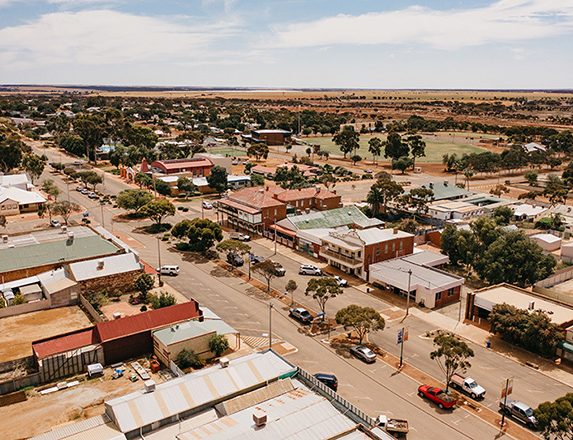
Southern Cross boasts a fascinating history. PIC: Tourism WA
The Yilgarn History Museum is the ideal place to get to grips with the area’s rich history. Housed in the former courthouse, which was built from mud bricks in 1892, the museum boasts a model of a gold battery, a camel wagon, and a range of artefacts and memorabilia including bottles, documents, and photographs.
Nearby government buildings include the Mining Registrar Offices and the Post Office.
The first pub was built here in 1889 when the Club Hotel became the departure point for Cobb & Co coaches. The hostelry was rebuilt in 1910 and was fully restored in 2022.
The heritage-listed Palace Hotel, built from red brick hotel in 1911 is also a popular spot for travellers to grab a drink and a bite to eat.
As always, a stroll around the town’s cemetery offers visitors a fascinating insight into how early residents lived …and died. There is no shortage of tombstone inscriptions depicting just how devastating typhoid was here.
Southern Cross is surrounded by large farms and stands at the edge of the Great Western Woodlands. Just to the west of town is the Wimmera Hill Lookout which offers great views over the settlement and the surrounding countryside. A monument complete with farming and mining equipment was erected at the lookout in 1988 to celebrate Australia’s bicentenary. Every night an arrangement of lights organised in the shape of the Southern Cross is turned on.
Of course, from mid-July through to mid-September, the landscape boasts a spectacular display of wildflowers. Despite this seasonal explosion of colour, this is an area of low rainfall and the dry climate provided a challenge to early settlers and those building the railway back in the day.
Some 50 kilometres from Southern Cross is Karalee Rocks, where visitors can see the incredible solution to the problem that was made in 1897. Here, stone walls direct the rain that falls on nearby granite outcrops into a metal aqueduct from where it flows into earth tank capable of holding nearly 50 million litres of water.
There is 72-hour camping allowed at Karalee Rocks, and also at Lake Koorkoordine eight kilometres north of town. The lake area though is rugged and remote and only suitable for self-contained and well-prepared travellers.
Another option is low-cost Bullfinch Caravan Park, situated about 25 minutes north west of town. In Southern Cross itself, the Southern Cross Caravan Park features more than 20 spacious powered sites, and a full range of facilities.