

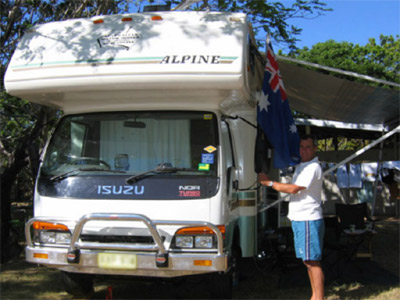
Retirees are more active, smarter and healthier than ever before.
It’s well known that the average life span of people living in the west has been increasing in recent decades, but it seems today’s ‘more mature person’ is also smarter, stronger and faster than his or her counterpart from yesterday.
For grey nomads who are used to hitching and unhitching, packing and unpacking, hiking, driving, and Happy Hour’ing, it will probably come as no surprise to have it confirmed that they are a lot better equipped for the rigours of the road than their forebears.
Researchers in Finland have compared the physical and cognitive performance of a group of older people with a similarly aged group from three decades earlier. Improvements were seen in almost every test, indicating real progress has been made in extending the number of healthy years a person lives.
Back in 1989, academics from the University of Jyväskylä gave a group of around 500 subjects, aged between 75 and 80, a variety of physical and cognitive tests. Three decades or so later, a second cohort, again aged between 75 and 80, completed the same barrage of tests … with startling results.
Improvements were noted across almost all tested metrics in the later-born cohort. Looking at physical performance, walking speed was faster, grip strength improved between 5% and 25%, knee extension strength improved between 20% and 47%, and lung function measurements were better.
Similar improvements were also seen in the later-born cohort across most cognitive performance tests. Matti Manukka, a post-doctoral researcher working on the project, suggests a broad variety of factors can explain why the later-born cohort displayed such consistent healthspan improvements.
“The cohort of 75- and 80-year-olds born later has grown up and lived in a different world than did their counterparts born three decades ago,” says Manukka. “There have been many favourable changes … these include better nutrition and hygiene, improvements in healthcare and the school system, better accessibility to education and improved working life.”
Maybe, a similar Australian study would also have made mention of the health and vitality benefits of living an action-packed, ever-stimulating, ever-challenging life on the open road!







Yes
Yes, but to be fair those retirees aged 80 in 1989, would have retired probably 15 years earlier putting them amongst those that worked longer hours, less mechanisation, two world wars and Vietnam war. The poor buggers were simply worn out!
I totally agree “ simply worn out”