

A proposal to lower the default speed limit on country roads to perhaps as low as 70km/h looks to be facing a bumpy road ahead.
Last month, the Department of Infrastructure sought public feedback on a plan contained in its Regulatory Impact Analysis paper.
It offered three options for sealed country roads that didn’t have specified speed signs … 90km/h; 80km/h; and 70km/h.
And two for unsealed roads … 80km/h; and 70km/h.
The document said that, in 2024, 1294 people were killed on our roads, with more than 30,000 people seriously injured as a result of road crashes … with speed as a major factor.
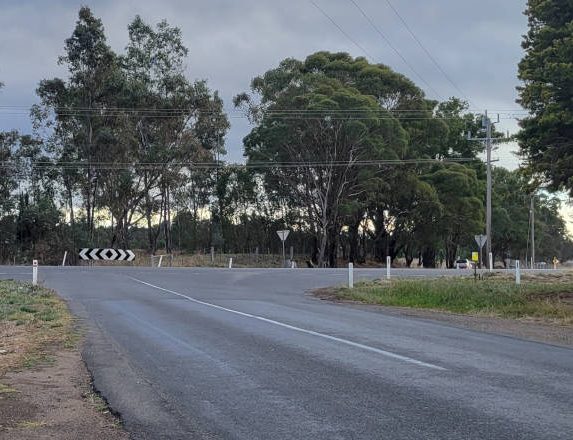
Fork in the road! Will country speed limits be dramatically reduced?
“Some roads outside of built-up areas, especially in regional and remote areas, may not be safe to travel on at 100km/h,” the analysis stated. “Many of Australia’s regional and remote roads are not sealed, and may be dirt or gravel tracks … other roads may have sealed surfaces, but may be in poor condition, or lacking the road features that would enable safe travel at high speeds.”
The period for public submission on the proposal has just closed and, if anecdotal evidence is anything to go by, it’s not likely to get a lot of support.
The Grey Nomads original story on the plan received hundreds of comments, most of them uncomplimentary.
 “Road conditions change no matter what the posted speed limit is and drivers should drive to the prevailing conditions,” said one poster. “Having lived in remote areas a newly graded road can have a better surface than some so-called sealed highways … as the surface changes so should your driving.”
In its response, NSW motoring organisation, the NRMA said it acknowledged speed as a contributing factor in crashes in regional areas, but did not believe the Regulatory Impact Analysis showed sufficient evidence to support a drop in the open road speed limit.
“Any provisions relating to speed limit settings must be underpinned by a clear, evidence-based framework,” the NRMA said. “Decisions on speed limits should be informed by detailed assessments of road performance, including crash history, traffic volumes, engineering design, safety ratings and congestion.”
The NRMA said it was also concerned that regional and remote communities would not support the proposed blanket reductions to open road default speed limits.
And some opposition politicians have pointed at investing in improving the state of roads as a more effective safety step.
Federal Nationals Member for Riverina, Michael McCormack, says the idea of slashing default speed limits on rural roads in poor condition is a shortcut solution to the problem of insufficient funding for regional, rural, and remote areas.
“The government must listen to feedback from regional people who gave feedback during the consultation period – they want the government to invest in fixing our roads, not cutting speed limits and ignoring deteriorating roads,” he said.
The Regulatory Impact Analysis is part of the National Road Safety Strategy 2021-2030, agreed to by state, territory and commonwealth governments in May 2021.
Are you a Grey Nomad member yet? Click here to find out about the discounts, competitions and other benefits on offer.








I think that speeds should be lowered mainly because quite a lot of our roads are in such bad condition.
We tow our caravan at around the low nineties.
We get ”blown off the road” by people towing caravans at 110kph even in wet windy weather.
On our last 3 month trip from Melbourne to Yeppoon QLD we saw quite a few caravans laying beside the road wrecked.
Not a pretty sight.
Typically these people will speed whatever the posted limit is, more police presence on the roads might assist
would be great help too busy crime rates out of control everywhere
The subject IS NOT about sign “posted” speed limits.
It’s only about the rural DEFAULT speed limit under ARR 25.
That limit, should never have been 100kmh.
The states set speed limits, but use AS (1742.4) speed control signs to do so,- for uniform design parameters. Pre July 1979, NSW applied speed derestriction (//) and to this, this state applied a PRIMA FACIE 80kmh limit. You could exceed this, if safe to do so at the time, having regard to prevailing conditions.
When NSW Labor under Wran removed (//), we adopted, as a trade off, a 100kmh rural default.
Similar experiences, but not always the exact same as NSW, applied in VIC etc and so at earlier late 60’s-70’s as each dropped the politically incorrect speed derestriction.
Now, in line with the old NSW prima facie 80kmh limit, we propose an 80kmh rural default, not as a prima facie, but as an ‘absolute’, the same legal effect as if posted with an 80kmh speed limit sign.
Having regards to the low quality of rural roads and tracks the rural default applies, 80kmh is sufficient and a reasonable trade off, compared to the ludicrous 100kmh we currently have.
NONE OF THIS relates to vehicle category, OR licensed category speed limits, NOR to posted speed limits, which can be as high as 130kmh for a length of say intercity motorway, or if a jurisdiction wishes, speed derestriction.
Quite a FEW really we been travelling for 5 months and have done just over 25 thou and seen 3. Yes 3 is too many but please dont exaggerate
We saw 6 wrecks in a 5,000km round trip. That’s quite a few in our book.
Wait until you drive the Great Central Road. We counted 100’s of wrecked and burnt-out cars between Leonora and the Olga’s. Mainly late model 4wheel drives.
Comes down to driving to the conditions
People great hurry ,speed limits ignored ALL IN THE HEAD
For those towing and then overtaking and driving faster then what is safe, a reduced speed limit will not change their behaviour. They ignore the current limits, a lower limit will not make them obey it.
In WA the speed limit for towing a caravan or trailer is 100klms per hour, but like you said you do get those who go a lot faster, plus incorrect loading also causes caravan accidents.
Poorly maintained roads will sadly kill and or injure drivers. Dropping to 70kph is a clear slap in the face to regional drivers and truck drivers. It is economically unviable. 48 weeks of the year metro drivers remain on better maintained roads than their country cousins. Maybe a rethink on drivers planning a road trip would help, for example go online and view planned trips and have a rating from 1-5, 1 the best. City drivers then get an up to date account of what lays ahead and accordingly plan the trip. If say rated at 3 that tells the driver the highway is in average condition so 80kph is the limit (for ex amount of km) on the posted 100kph. If it’s rated 2 that’s 70kph. If rated 1 that’s 60kph, rated 4 90kph rated 5 100 or the posted limit which may be 110kph. Lowering the limit will not work. Authorities say speed is the main cause for deaths so that’s an assumption the speed was well above the 100kph or well above the 60kph. Many deaths will still occur from impatience, speed and road rage.
Absolute rubbish. Maybe if the people sitting on the RIA actually lived in regional areas this wouldn’t be up for discussion
When sitting for a licence would it be better to get the learner to drive on all road conditions under supervision to teach them the dangers of rough surfaces which can change with every kilometre driven. This would give them knowledge for the rest of their driving lives you would think. I know that’s how I learnt to respect the roads I have driven on .
Having lived on dirt roads for the majority of my life and I’m near 70 now, I can tell you from first hand experience there is no danger on dirt roads if you travel to the road condition . I have driven at 100 kms on a smooth dirt surface and crawled along at 10 kms on a rippled road that shook me and the car to bits . And many different speeds in-between . Country folk do not need more rules in their day to day lives and routines . When do we stop trying to fix things that are not broken because someone has done a masters degree and decided dirt roads should be proven dangerous . If that’s the case then why aren’t the all dirt roads being bituminised as a matter of urgency. One would think that’s the correct action to take than deliberately making speed the scapegoat.
Why not develop a phone or web app that would allow a person to take photographs of dangerous roads and send them to the area council road management dept. The exif dat6a on the photo or the phone could supply the GPS coordinates of the dangerous road location.
Only if the local road maintenance division knows that there is a dangerous section of road can it fix it.
Temporary signs like the ‘Water over road’ and ‘Soft shoulder’ signs should be created which has a symbol for the type of danger and recommended or temporary maximum speed should also be designed.
Punish councils for failing to maintain roads and for not repairing and temporary signing dangerous roads when notified by the public in a timely manner.
Likewise punish drivers from ignoring these temporary signs.
They don’t say the people out of city now increasing there speed by 40 to 50 ks per hr now driveing faster in more open space be like us country people driveing at 140 to 150 kilometres per hr
This is a combination of 3 things
Seems to me to be a dead horse one — more thought & consideration should go into spending ALL revenue raised by licensing & fines etc on our roads instead of burring it in general profit for govt.
It’s because someone sitting behind some desk somewhere is trying to justify their place in their government position and wanting to look important
GREAT REPLY hit the nail on the head
A lot of that throughout all govt’ s
Government should make it a requirement to do an advanced driver training course before getting your P plates so you have an idea what to do in an emergency situation. And maybe the cops could give a crap about when you make a complaint about idiots using your road as a drag strip every Friday night doing their 200mph runs.
Instead of cutting the budget for rural roads, increase the budget at least back to what it was & fix the roads, lowering the speed limits on country road is only revenue raising & this is always the Governments preferred option instead of fixing the problem , they keep saying it is speed when it is actually poor maintained roads
Governments always take the easy option, especially a Government that is in dept like the current state government, wasting all the money on renewables
It just makes councils and governments even more lazy than they are.Make the roads safe to travel.Many unsealed roads are far worse than sealed roads.eg Bruce Hwy,Perth to Kalgoorlie.Have travelled the GCR & it was great-motor bikes,cyclists & easy 80 to 100 kph.
Kick the ” experts” out of their ivory towers and comfortable offices and make them experience the issues that the local residents face daily, by spending time out, to actually see what the real problems are. Speed is not the main issue, driver training, road conditions due to lack of funding of regional areas are some of the biggest issues and concerns of regional residents and councils.
In the Bega Valley area, recently council/ TfNSW installed guard rail, then proceeded to lower the speed limit.
Surely the guardrail should have mitigated the need to reduce the speed limit?
Another road the speed reduction from 100 to 80, blamed on supposed accident data, an easier/ cheaper option than actually resolve the real problem – the condition of the road surface.
Government’s should stop making other’s people’s lives difficult simply because they wish to shortcut investment in infrastructure. They need to do their job which includes better and safer roads.
The governing bodies twist the statistics to suit their agenda. So in 2024 there were 1294 persons killed on Australian roads. They don’t tell you that is out of a population of 25 million people.
Lets go back to 1969 – 70 when Australia had a population of approximately 13 million people which means there was about half the vehicles on the road and the same for licensed drivers. In those years the road toll in NSW and Victoria was in the vicinity of 1200 people each with the total road toll in the vicinity of 4000 people.
SO, if you work the statics on deaths per 100,000 people or vehicle registrations or licensed drivers you will find the road toll in Australia has reduced dramatically over the last 50 years.
so I will let you work out whether you believe the lies or the statistics.
Does this apply to all Australian roads?
I think we have to stop making decisions that cater for the people who aren’t able to drive to the conditions of the roads they’re driving on.
Commonsense seems to have gone out the window.
And it just has a feel of money grabbing by government.
Personally I’m all for it. We’re fulltime 81/2 years and seen many people towing at speed on country roads . We drive many backroads and quite often are overtaken by utes towing large swaying caravans .sadly lowering the speed limit won’t stop some people speeding on these roads nor will more police presence.
Then why are you for it if it won’t do anything?
You can’t legislate against stupidity.
Keep the speed limits the same, Next we will be forced to walking pace with someone holding a red flag in front. When I started driving in the early 60’s, there were no restrictions on speed on the open roads, which by the way were mostly unsealed. Of course there are many more cars on the roads these days as the population has swelled, but at the same time, cars are far more sophisticated with ABS and other features that make them much safer than cars sold in previous generations. “Safety” is always used as the “reason” for control of the population. But it’s actually all about control. !
Could be a good business opportunity in the making here. Supply of red flags and a person to walk in front of your devilish RV while the driver ensures it crawls along at a super safe low speed. !!!
Speed is not the killer – crashing at speed is!
During the ‘fuel crisis’ in the 80’s, The USA reduced the maximum speed limit to 50mph nationally. The resulting analysis found that road fatalities had reduced to 25% of the normal average and the fuel usage drastically reduced.
One can get down to a controllable speed in an emergency in a quarter of the distance/time at 80kph compared to 100kph. It is the distance travelled during to the reaction delay even before the extra distance travelled while under full braking.
I drive at 80-85kph and am mindful of other drivers, talk to the truckies keep, out of the way if possible etc. been doing this for 18yrs in a 26′ motorhome, never a problem, never a middle finger. Lot easier to pass at 80 than 100.
Before retirement in 2007, I ran a heavy vehicle business so driver safety, fuel usage, tyre wear and brakes were the main consideration. So please fellow travellers, before you start the motor, just think.
THIS MIGHT BE THE MOST DANGEROUS THING THAT I EVER DO (speed kills)
No reduction in speed limits if anything an increase in speed limits with an increase in the road conditions like the roads being build today duel lanes allowing easy overtaking and some drivers need to travel in the left lane when a vehicle is traveling up behind them to allow free traveling of vehicles drivers need to pay attention when driving and be To be polite to other road users
Drivers should drive to the condition of the road Australia is a bit county with families spread across Australia and drivers need
Discussion relates to the rural default speed limit under ARR 25, not to sign posted speed limits, which can be higher than 80kmh, if a particular road or motorway warrants it.
We are not going to upgrade state Forrest tracks to dual carriageway:-))) This is the type of rural roads covered by the rural default.
Country road speeds should be left as they are. What needs to happen is this Government needs to put more money into road repairs. The Government needs to stop spending money on useless wind turbines and solar farms. The tax payers money needs to be injected into road maintenance as most of our country roads are now a disgrace. Also, where does our vehicle registration money go? I thought that went into road maintenance.
Exactly Colin, l thought that our car registration went on maintenance on roads. If the government don’t want to keep up the maintenance on our country roads then they should lower the price of registration of vehicles that predominantly use these roads.
I think it might be more of a revenue raiser than a serous look at slowing people down I think the majority of people drive to the road conditions the idiots still won’t slow down bring back the police patrols,we hardly see any on our travels through NSW and Queensland
they should be left as is, increase the funding would certainly help.
Government should use the revenue they collect to fix/improve the roads. How are they going to enforce speed limits in remote areas?
Have these nongs ever driven for a couple of hundred km of nothing between pockets of civilisation? Lower the limits and risk accidents through drowsiness. Should be more effort required to attain and retain licences. Some people regard driving as a ski
Reply to Denis Nolan. The app exists. It is Snap Send Solve. Works wherever the authority is that subscribes to it.
Try this on in the city and see how far you get. The answer as always is to make the roads drivable, but Governments only want to take the cheap options reducing the speed limit is easy way out for them and to hell with the people.
It’s a big fat no. I just returned from South Australia, travelling through Victoria to New South Wales, and I have to say that Victorian roads are the worst. It’s disappointing that the government can’t seem to invest in fixing them. They should prioritise road maintenance and increase police presence instead.
On the other hand, South Australia’s roads were good, especially with overtaking lanes every 10 kilometres or so. I was driving when a semi-truck came up behind me, and the driver said he was happy to stay behind until the next divided road. South Australia had plenty of overtaking lanes, and heavy vehicles were aware of them.
Wouldnt matter what speed limit (i like it to be 70 )you set,you arestill going to get the brain dead idiots,fuel by grog or drugs or just being late,idiots
Why not just do what government is meant to do..invest in our future..build and fix the roads Australia relies on roads that a fit for purpose.. have a viable manufacturing industry…tourism…give incentives to people to have a go..stop wasting our money on projects that do not pass the pub test..and last but not least politicians should be on the same rules as every other Australian worker..
In west aust .the major causes of rural crashes are kangaroos at plague levels, mobile phones,overseas drivers who buy international licence s that are no better than L plates,drugs we have huge problem and what they don’t drive stoned ??.alcohol especially overseas drivers who forget what side of the road there on and don’t know the limit @.005 .can be riding a donkey at home and then get to drive a relatively powerfull car here .fatigue especially after a party or driving at night or long distances but mainly linked to alcohol and drugs .Speed be a secondary factor after drugs alcohol or not understanding Australian roads or endless speed limits .this info comes from 1st responders except police who write reports .Speed is always blamed due to the way statistics can be manipulated especially by keyboard academics and insurance companies
How about setting (and erecting a sign to such effect) where the existing default speed limit is not appropriate? I’ve come across plenty of corners at even 80kmh where I’ve thought (in the middle of the corner) “I’m annoyed that was not signed as an outlier with not even a recommended speed”.
I get that Australia is big, but the solution is not to throw out the baby with the bathwater.
All this hooha about reduced country road speed limits is ridiculous. I live in a country town that has many single lane minor roads where you can legally drive at 100kph even though you’ve just turned off a two lane C road that has an 80kph limit. That’s what this proposal is aimed at so stop getting your Allen’s in a knot…
If governments did actually want to reduce the road toll they’d arrange training and licence testing to acrually teach people to drive, instead of merely teaching them to pass the laughably simple licence test.
The government should reverse the road building in the cities and spend the cash on country roads instead of the 100km boundary around the capital cities that they do roadworks on at the moment. Then they should reduce the road speeds in the cities to 10kph and make everybody walk next to their car to get to work and back home again. Dropping the speeds in the rural areas is only going to bite them in the rear end as lower speeds would make truck deliveries longer between the capital cities and prices for food would triple as most of the food grown in Australia is done in rural areas. Maybe a good purge of all of the nanny minded politicians would be a start as the world we live in isn’t made up of cotton wool, fluffy bunnies, and butterflies.
Common sense should prevail,conditions drive parameters for applied safety limits and regulations.
They shouldn’t be reducing them but increasing them. 130 for major highways, Derestricted for minor highways with a recommended speed of 100. And 80 for dirt roads. This changes for wet conditions with ENFORCED speed limits of 100 for major highways, 80 for minor and 50 for dirt roads.
What is required is driver education, if the speed limit is lowered the accidents will increase owing to drivers who are impatient and make stupid decisions. A better solution would be to have more police visible on the roads.
Rural councils in NSW have been reducing country speed limited from 100kph to 80 kph as a cost cutting measure for years. Ridiculous but this is no better, just it’s being done with the sanction of Government.
Could it be that the reason for more accidents was every driver is so fixated on not going over the limit, anxiously watching their speedometer instead of the road ahead?
I have just returned from Alice Springs.
I observed that on the Stuart Highway In S.A. the max speed is 110kmph, in the N.T. it is 130kmph.
Whilst the road is designated a National Highway and reasonably well maintained there is no shoulder to to pull onto in the event of any problems for most of the journey and rest areas for cars are far apart.
There is also a difference in the width of the roadway itself as well as different types of roadway surface mixes that in spots made it difficult in sighting the roadway markings.
Given this road is the main north south road from Adelaide to Darwin with a number of tourist spots accessible from this road the speed limit of 130kmph from the border north to just south of Alice
Springs is an open invitation to accidents with drivers unaccustomed to such speed and road conditions.
On our journey we had 2 near misses, 1 with a goat near Broken Hill and 1 with a couple of cows north of Glendambo, luckily we were running at around 90kmph and were able to stop without incident, but the second incident with cows the road train following had to go to wrong side of road, thank heaven for the long straight road.
In some spots we reduced our speed to 80kmph due to condition of road surface.
What percentage of accidents are being contributed to foreign immigrant drivers, who have brought their overseas driving skills ( or lack of) over here with them? Many have gained employment driving trucks, delivery vehicles and buses. Also, has anyone thought about the added danger of drivers, especially when driving in the country, being more prone to fall asleep at the wheel because of the increased time it will take to drive from A to B if the speed limit has been dropped by over 30kms per hour?? If your journey is 5000 KMs at 100 kilometres per hour, that means the journey should take between 5 or 6 hours minimum depending on conditions. If you then have to travel the same 5000 KMs at 70 kilometres per hour that increases the trip to a minimum of 7 to 8 hours. An extra 3+ hours behind the wheel, just trying to get from one place to another is a recipe for fatigue and fatigue leads to drowsy drivers who suddenly blink their eyes a little longer than normal, micro sleep, and next thing have run off the road, and either rolled or hit a tree. Not every road trip goes past numerous towns with all night eateries and places to stop!!! And what about the extra cost that will be involved due to the extra time it will take delivery trucks to transport their goods. They are on almost impossible time lines already!