

The whale watching season has officially arrived in NSW, underscored by the early appearance of humpback whales along the coast.
Each autumn, around 40,000 humpback whales leave the krill-rich waters of Antarctica and travel north along the NSW coastline to warmer waters off NSW and Queensland to mate and calve.
Their epic 10,000-kilometre round trip is one of the longest migrations undertaken by any mammal.
Experts say these journeys are essential for survival, connecting feeding grounds and breeding grounds in a cycle as old as the species themselves.
Growing up to 16 metres long, these ocean giants are a breathtaking sight, delighting onlookers with breaching, tail slaps and playful behaviour close to shore.
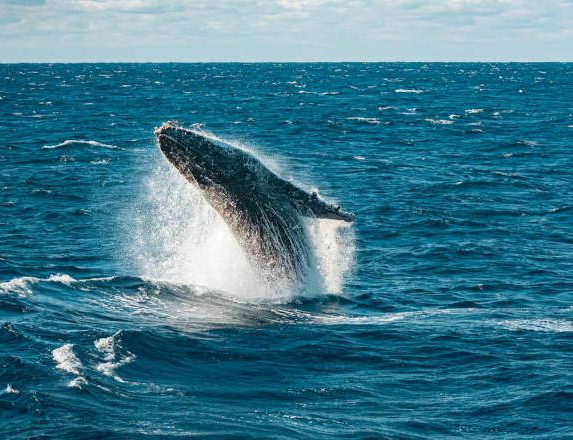
Wow! A humpback breaching just off the NSW coast. PIC: Hallie Evans / Pexels
While migrating whales in states like Victoria can be spotted from May through to October, experts say June to September is prime time for viewing one of the magnificent mammals.
 Over in the west, whales can be seen all the way from now until December as humpback, southern right, blue, and orca whales migrate along the coast.
It is believed that whales are more active early in the morning, but they might be easier to actually spot in the middle of the day when the sun is directly overhead. The best viewing days are also when the ocean is relatively calm and the waters flat.
Many grey nomads, of course, make spotting whales an enjoyable part of their travels while on the coast.
Veteran traveller Cindy Kay is excited to get her binoculars out again as she journeys up the east coast.
“Last year I was really lucky while on Woolgoolga Headland on the NSW Mid North Coast,” she said. “We couldn’t believe how close the humpbacks came to the shore and we could actually hear them communicating with each other as they breached and put on quite the show.”
Are you a Grey Nomad member yet? Click here to find out about the discounts, competitions and other benefits on offer.








We are in Broome waiting for the arrival can’t wait to be fishing from the boat & have the whales breaching all around again.