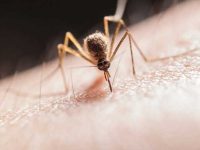

Following heavy and prolonged rains in many parts of the country, experts are warning of a rise in serious mosquito-borne diseases.
It’s an issue that grey nomads camping out in national parks, forests, and waterside areas need to be keenly aware of.
The mosquito-borne Japanese encephalitis virus (JEV) has already claimed at least two lives in Australia in recent weeks, and it has been detected across four states.
University of Queensland virologist Jody Peters said weather conditions associated with La Niña had created ‘excellent environmental conditions’ for the virus to thrive.
She told the ABC that flooding in Australia’s north had triggered the migration of birds further south which were part of the ‘cycle of Japanese encephalitis’.
“Waterbirds in particular, they will become infected, they develop a lot of virus in their bloodstream and then they subsequently infect another mosquito and that drives this transmission cycle,” Dr Peters said.
She said infected pigs could also contribute to transmission.
“Pigs do develop enough virus in their bloodstream to infect another mosquito that comes and bites them, so clearly this is what has happened and why it’s so rife in the pig farms.”
Authorities say JEV cannot be spread from person to person. It is a mosquito-borne disease and although people can catch it from mosquitoes, the insects can only pick the virus up from animals and birds.

Experts worry that JEV could take hold in the feral pig population. PIC: ABC
There are also fears that, if the virus spreads into Australia’s estimated 24-million-strong feral pig population it could become a major issue.
Australian Pork chief executive Margo Andre pointed to the heavy rains on the east coast as the reason for increased risk of the virus’s spread.
“With so much water everywhere, we’re seeing outbreaks of large mosquito swarms,” she told the ABC. “At this stage, we are not aware of any Japanese encephalitis in the feral herd, but we are doing regular surveillance, baiting programs, and reducing those numbers … we’re certainly not taking any chances.”
Victoria’s Deputy Chief Health Officer, Deborah Freidman, offered some reassurance, saying that the fact JEV couldn’t spread among people meant it would not lead to a pandemic.
“Because Japanese encephalitis is not transmitted from human to human, it doesn’t have the capacity to cause a pandemic the way influenza or coronavirus can,” she said.
The ABC reports that most people who contract JEV will have no, or only very mild, symptoms and fully recover. It is thought that only 20% of people with JEV go on to develop any symptoms and only a very small number of them display significant symptoms. However, the disease can lead to a serious inflammation of the brain.
Anyone who develops a sudden onset of fever, headache, vomiting as well as seizures or disorientation should seek urgent medical attention.
There have certainly been plenty of previous instances where travellers have got seriously ill following insect bites.
After retiring and hitting the open road, David and Adrienne H were having the time of their lives … until David contracted the Barmah Forest Virus.
And this grey nomad went from being extremely active to constantly exhausted after contracting Ross River fever following a mosquito bite.
And this woman was diagnosed with a dangerous disease after being bitten by a tick while camping at a popular camping spot in north Queensland.
Cameron Webb, a researcher for NSW Health Pathology, says there are several precautions people should take against the threat of mozzie bites.
“We’d always recommend if it’s possible to wear light, loose-fitting clothing and use a topical insect repellent,” he said. “Don’t follow a recipe to make up your own insect repellent that you’ve seen on the internet, because the commercial products are far less likely to cause skin reactions and can prevent mosquito bites.”
And he warned that even the most effective mosquito coils only reduce your chances of getting bitten, rather than providing complete protection.