

By Andrew Bottoms, Century Batteries
For many of us, spring marks the start of the travelling season. The weather warms up, the van comes out from under the cover and, after a long winter, those holiday plans finally start to take shape.
But if your rig has been parked for a few months, there’s one thing worth checking before you turn the key…
Batteries don’t like sitting still
A battery that isn’t being used slowly loses charge (self discharge). Left long enough, that gradual discharge shortens its life and can leave you with a vehicle that won’t start when you need it most or with insufficient power to run your on-board accessories.
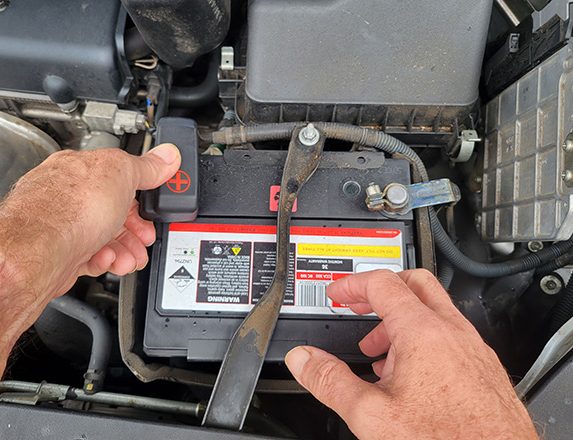
It's worth inspecting batteries on a regular basis.
This can be amplified in modern touring vehicles, where additional advanced electrical systems can continue drawing small amounts of power even when the vehicle is parked. Security systems, vehicle electronics, monitoring equipment and aftermarket accessories can all contribute to what is known as parasitic load, a small but continuous drain on the battery.
Over time, even a relatively small drain can significantly reduce a battery’s state of charge.
 A battery that remains partially discharged for an extended period can also suffer from sulfation, where lead sulfate crystals build up on the battery’s plates and reduce its ability to accept and deliver charge. This is one reason why simply starting the vehicle for a few minutes after it has been sitting for extended periods isn’t necessarily enough to restore the battery to a full state of charge.
Most touring setups have two batteries doing very different jobs. The starting battery gets the engine going. The auxiliary deep-cycle battery/ies runs everything else: the fridge, the lights, the water pump, the chargers. Both need attention, and they show their age in different ways.
Know what you’re asking of them
The starting battery is designed to deliver a high burst of current for a short period to crank the engine. It needs to maintain sufficient charge and have the capacity to deliver the required starting current reliably, particularly in colder conditions.
The auxiliary or deep-cycle battery, on the other hand, is designed to provide sustained power to equipment such as the fridge, lights, water pump, chargers and other accessories over extended time.
Understanding this distinction is important because battery selection should be based on how the battery is being used, not simply its physical size or capacity.
The deep-cycle battery system set up is where long-term travellers tend to get caught out. Power demands may have crept up as more accessories such as that upgraded fridge or induction cook top are added, yet ensuring the vehicles deep cycle power system and setup can keep pace with these changes is often overlooked.
Before heading off, it pays to check the power requirements of all accessories you are running and for how long. Then calculate what your equipment is actually consuming and ensure your system is matched accordingly. Always remember to add on a 10-20% safety margin to cover shortfalls and avoid any downtime. Use the Century Batteries deep cycle battery calculator to easily determine your power requirements and find the right battery capacity to run your appliances and devices on your next road trip.
A few basic things worth doing before you go
Regular battery inspection, both for the starting and auxiliary batteries should form part of your vehicle’s regular maintenance routine. However, frequent deep discharges, extended periods at a low state of charge, high temperatures, vibration and charging issues can all influence battery performance and service life and may not be easily identifiable. That’s why a proper battery test is more useful than simply looking at the battery’s age or checking whether it still starts the vehicle.
A battery can be in good condition but perform poorly if there is a loose, corroded or high-resistance connection. This is particularly important for caravans and motorhomes travelling on corrugated roads, where prolonged vibration can loosen connections and mounting hardware. Check that terminals are secure and free from corrosion, cables are in good condition and the battery is securely mounted.
For auxiliary systems, also check connections at the charger, isolators, fuse protection and other key components. Any signs of heat damage, corrosion or loose connections should be investigated before travelling.
Don’t leave it to the morning you leave
This is the important one. A battery check takes minutes, but replacing one on the day you’d planned to depart can be a frustrating delay and possibly a longer wait if the right battery isn’t in stock locally.
Give yourself a week or two of breathing room and If you’re unsure about the condition of your batteries or whether your setup suits the way you travel, any battery specialist can test them and talk you through it.
Every stop on your spring trip should be a scenic one, not a roadside one. A reliable battery is a modest investment against being stranded a long way from home, so get yours checked, travel safely, and enjoy the season ahead.
Andrew Bottoms is the Marketing Manager at Century Batteries, which has been designing and manufacturing batteries for Australian conditions since 1928.