

The surge in caravan and motorhome usage within Australia could place extra pressure on regional wastewater treatment systems because of the chemicals commonly used in their toilet systems, according to brand new research from Flinders University.
When grey nomads and others using caravans empty their toilet waste at roadside dumpsites, caravan parks and regional dump stations, the wastewater – which contains concentrated detergent, deodoriser and sanitiser chemicals – is transported to local wastewater treatment plants.
Flinders University researchers focused on whether caravan toilet chemicals such as bronopol, a powerful disinfectant chemical, may disrupt wastewater treatment microbes.
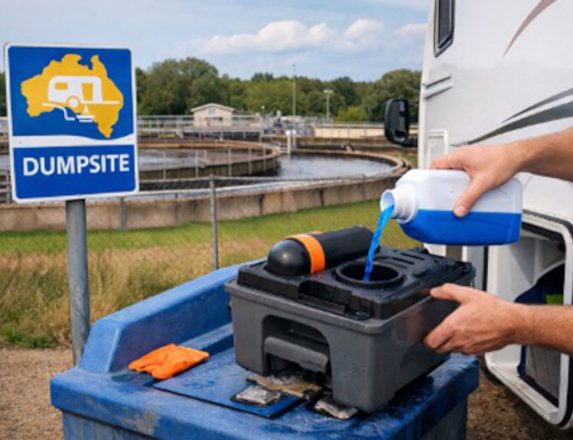
Chemicals used in van toilets may be causing issues. PIC: Flinders University
“While these products help maintain hygiene inside caravans, the chemicals may interfere with the beneficial microbes used in wastewater treatment systems,” says researcher Rajshekar Indela, a PhD student in Flinders University’s College of Science and Engineering.
A study published in the Journal of Environmental Management has investigated how caravan travellers across Australia use toilet detergents, deodorisers and sanitisers (DDS products) to understand what this could mean for the environment.
 The research surveyed 160 Australian caravan users and found that most travellers regularly use chemical toilet additives to control odours and improve hygiene. The most commonly used products contained bronopol, a disinfecting chemical that can break down into formaldehyde and other potentially harmful compounds.
“The findings highlight a growing challenge for regional towns that manage caravan wastewater,” says Mr Indela. “Regional wastewater plants are often smaller and designed mainly for household wastewater, but caravan toilet wastewater is much more concentrated and can contain high levels of disinfectants and other chemicals.”
He said that bronopol can degrade into persistent and toxic by-products, including formaldehyde, 2-bromo-2- nitroethanol, and related nitro-alkane derivatives, and these antimicrobial compounds may inhibit microbial communities critical to primary treatment processes in regional soakage pits and septic tanks.
As a consequence, the researchers mention that during peak holiday periods, increased volumes of chemically-treated caravan wastewater could reduce treatment efficiency and potentially affect nearby environments if wastewater is not properly treated.
This could have significant effects because study found that 65% of caravan users routinely use DDS products and while 83% follow the recommended dosage instructions, bronopol-based products were the most popular choice among users.
Research co-author, Professor Kirstin Ross, says the findings can help regional councils and wastewater operators better prepare for increasing caravan-based tourism.
“Understanding what chemicals are entering wastewater systems is important for protecting public health, wastewater infrastructure and the environment,” says Professor Ross.
The research team says further studies are needed to better understand how caravan toilet chemicals behave in wastewater systems and how treatment plants can adapt to increasing tourism pressures.
WIN IT-FIT CARAVAN SHEETS
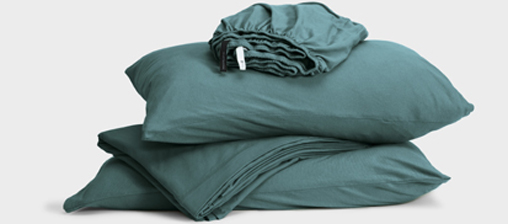 Grey Nomad members are being given the chance to win some specially made caravan sheets, courtesy of competition sponsor, It-Fits.
It-Fits caravan sheets are made from soft, 100%-Australian, cotton jersey and naturally stretch and flex to adapt to different mattress shapes and sizes without needing custom-made sheets. They fit rounded corners, narrow caravan beds, bunk mattresses, and non-standard sizes while still staying smooth and secure.
Click here to learn more about the competition and how to enter.








Hi all. I don’t use the commercial chemical products. I use a capful of a laundry detergent poured into the cassette via the hole in the toilet pan. The second last drops I swirl around the toilet pan itself. I invert the cap next to the wall of the shower part of the toilet room and run the last drops along the floor beside the wall in the slope that drains the shower to the waste water tank. The laundry detergent helps dissolve the solids that go into the cassette and reduces the smell as the cassette is used. The trickle left on the floor leaves a pleasant enough atmosphere in the shower/toilet recess until after the first shower. Choose a laundry detergent with a pleasant scent. I use the laundry detergent also because I can empty the last cassette into our septic tank when we get home, without the fear of destroying the natural processes in the septic system.
Alan Larsen (Sydney Wanderer)
Unless.your useing a natural laundry detergent your not actually doing your septic any favours making your own laundry powder borax and eucalypt or lemon myrtle is way more cost effective and a lot more environmentally sound
I installed a composting toilet in my caravan. Easy.
Give that most regional influent wastewater is domestic rather than traces of tradewaste composite, i would say it has a very minor influence on micro organisms. You have to complete a comprehensive study to determine its effect and action . It also depends on the treatment plant process type.most treatment plants have monitoring equipment example DO dissolved oxygen that will support findings
Thats is just half the story in understanding treatment plant processes.
40 years experience
We fitted a SOG system to our Thetford toilet. It was easy to fit and despite thinking that it couldn’t possibly work as well as others claimed – it does!. It is brilliant, no smells at all, not even a whiff and of course the bonus that no chemicals are used just plain flushing water.
What does SOG mean
We use eucalyptus to freshen and disinfect the cassette after emptying by rinsing at the finish. Then I spray the bowl to clean, refresh and disinfect which keeps odours away
Much cheaper than chemicals and less mucking around
We have recently purchased Kohl brand dishwasher tablets to keep the grey water clean rather than the pills we received at purchase of the motorhome. It’s approved by environmental protection agency and others. Can buy in Woolies in detergent aisle
Composting toilet! So much better in so many ways.
Well the intelligencia at Flinders Uni have told us what NOT to use, BUT failed to tell us what to use. We use the home brand low cost Vanish stain remover.