

While the unusually heavy rain that has lashed much of the country in recent months has been a short-term pain for many grey nomads, its dangerous consequences will also be felt long into the future.
Floodwaters have caused massive damage to Australia’s already-imperfect road network, with giant cracks and thousands of potholes likely to make driving an extra-hazardous affair for many months to come.
In badly-affected New South Wales, for example, the road maintenance backlog was already around $1.7 billion before the recent deluges.
“Road maintenance is already one of the biggest expenses in council budgets without the damage that is expected from the flooding crisis,” said Local Government NSW president, Darriea Turley.
Many feel that it’s time to stop the ‘band-aid’ approach commonly adopted, and rebuild the roads in such a way that they can withstand future heavy rains.
“It’s not road surfaces that need fixing, it’s the road base,” said Natasha Frankensteiner from the Fix Our Rural Roads lobby group. “These roads, you can resurface them, but I can almost guarantee those same potholes that are there will be back within a month.”
It all has big financial implications.
 In New South Wales, local councils – many of them severely cash-strapped – are responsible for 90% of the state’s road network.
And it’s not much different at Federal level. While the Morrison Government’s Budget decision to halve fuel excise for six months was widely welcomed as offering motorists some relief at the bowser, there are those who worry what the knock-on effect will be on the state of our roads.
The petrol tax is intended to be a ‘cost recovery’ charge to pay for road maintenance. And the nation’s peak motoring body, the Australian Automobile Association (AAA), says more of the fuel excise, not less, should be spent on the nation’s ‘degrading’ transport infrastructure.
“Underspending on transport means that more people die on the road than need to, people have longer commutes than they need to, and regional Australia gets left behind and misses out on economic stimulus that it needs,” said the AAA’s Michael Bradley. “We need to make up lost ground.”
And the safety impact is certainly real. Late last year, a couple were seriously injured after their 18’ caravan lurched into a deep pothole on Victoria’s Princes Highway and swerved out of control before rolling down an embankment.
One of the caravanners whose life was nearly destroyed in the accident, Debbie, remains outraged that large potholes are still so commonplace.
“I’m really, really angry,” she said. “Some days you feel like you’re taking your life into your own hands because you’re trying to avoid the huge damage that’s been done to our roads.”







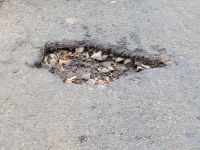



In South Aust we build our roads with pot holds. That way we save money
The New England Highway from Warwick to Armidale is atrocious. Some of the holes are deep and if not careful 4cyl and 6cyl cars (sedans, station wagons or hatchbacks) will have suspension and/or tyre damage. Time for forward planning and build motorways and highways inland like Europe and USA that can sustain heavy vehicle traffic and damage from the elements. We are so backward with connecting our inland cities with motorways, it should be a priority now there is a shift in population moving to regional areas since the Covid outbreak.