

The domestic travel boom is seeing many once ‘nearly-always-quiet’ caravan parks and campsites bursting at the seams.
As more families hit the open road rather than the airport, the arrival of extra kid-friendly facilities at van parks is also seeing prices creep up. And that’s all making for ‘interesting times’ for budget-conscious grey nomads.
The demand for free and low-cost campsites is clearly going to continue to surge, but the question then becomes: is there enough of them?
As many country communities continue to wrestle with the decision of whether or not they want to offer cheap camping facilities, the current answer has to be a resounding ‘no’.
What’s needed then is some creative thinking, and authorities with an eye on the future might well be looking at the electric vehicle revolution with interest.
For grey nomads, aside from the obvious advantage of not having to shell out a fortune to put fuel in the tank, the imminent(ish) arrival of ‘towing capable’ and affordable electric 4WDs might deliver another surprise benefit.
The ABC reports that Australia has an estimated 7,000 service stations dotted along its highways and byways, and the question is: what happens to them all once fuel bowsers are a thing of the past?
The fact is that electric vehicle chargers will eventually be available virtually everywhere, from the caravan park and shopping centres to car parks and rest areas, so there will be no need for service stations … at least as we now know them.
Current forecasts predict EVs will make up 30% of new car sales by 2030. Experts say that if Australia is to meet its commitment of net-zero domestic emissions by 2050, almost all transport will have to be electric.
Bottom line. Service stations are going to have to adapt … and maybe pretty quickly.
Fuel giant Ampol, which operates nearly 2,000 branded service stations in Australia, has already announced a ‘strategic reset’ around electric vehicles.
“Clearly fuel is going to decline over time,” said Matthew Halliday, the company’s chief executive officer. “We want to position the business to play a role in repurposing its assets.”
The ABC reports that Ampol plans for its nationwide network of service stations to become EV fast-charging locations, hydrogen fuel retailers, neighbourhood stores, cafes and restaurants, online delivery centres, and even small-scale utilities, with solar generation and battery storage.
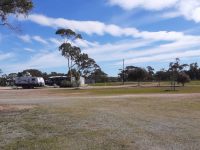
And one other logical possibility for some well-located regional businesses might be to offer camping to grey nomads. With the space, the facilities, and the location, it would seem to be a perfect fit.
“It is a big change and I think it’s something all of the petrol stations will need to think about carefully and prepare for,” says Anita Oh, a managing director at management consultancy Boston Consulting Group, which analyses the fuel industry. “But it’s also a big opportunity.”








How’s the serenity?
I think someone has confused reality with the Jetsons. For zero emissions we will need zero gravity
How many litres of diesoline per hour does a generator use? After you leave the wheatbelt in the North of Western Australia, the towns after Wubin on the Great Northern Highway use Diesel powered generators. No power from down south, all self generated. I know we are committed to reducing emissions but the North of Western Australia, Queensland and the Northern Territory are out on a limb. All the talk about electrifying vehicles comes from people who live in big cities not out in the bush where there aren’t big power stations. Please correct me if I’m wrong. South Australia has made a blue by trying to go all solar.
Don’t worry about the cost savings for electric . The government both federal and state will not give up on the tax revenue from fuel the costs for recharging will very quickly increase. When the federal government introduced a rebate for fitting lpg to cars it followed up by doubleing the price of lpg
I’ve got goose bumps all over me!